This is today’s edition of The Download, our weekday newsletter that provides a daily dose of what’s going on in the world of technology.
Musk v. Altman week 3: Musk and Altman traded blows over each other’s credibility. Now the jury will pick a side.
In the final week of the Musk v. Altman trial, lawyers attacked the credibility of the two tech leaders. Sam Altman was accused of lying and self-dealing, while Elon Musk was portrayed as a power-seeker trying to control artificial general intelligence.
The case unearthed new details about the two arch-rivals and OpenAI’s contested nonprofit status, as well as a golden trophy of a donkey’s ass awarded to an employee who challenged Musk.
Read the full story on the explosive final week of the trial.
—Michelle Kim
Michelle Kim, who’s also a lawyer, has been in court throughout the Musk v. Altman trial. Read her coverage of week 1 and week 2, plus a Q&A on what it was like in the room.
The must-reads
I’ve combed the internet to find you today’s most fun/important/scary/fascinating stories about technology.
1 Trump traded hundreds of millions in tech stocks before favorable policy moves
He bought shares in Nvidia, AMD, and Arm ahead of policy boosts. (Quartz)
+ And touted Palantir on Truth Social after buying its stock. (CNBC)
+ His crypto venture and Iran’s top exchange tapped the same networks. (Reuters $)
2 SpaceX plans to list on the Nasdaq stock exchange as soon as June 12
It wants to raise up to $75 billion at a $1.75 trillion valuation. (Reuters $)
+ BlackRock may invest up to $10 billion in the offering. (The Information $)
+ Cerebras’ blockbuster IPO has boosted hopes for the listing. (CNBC)
+ Which is set to dwarf many of the biggest IPOs on record. (Reuters)
3 Chinese AI groups have pulled ahead of US rivals in video generation
ByteDance and Kuaishou’s models lead in realism and scale. (FT $)
+ AI is fueling China’s short-drama boom. (MIT Technology Review)
+ While its AI labs are betting big on open source. (MIT Technology Review)
4 Iran says it will charge Big Tech for using undersea internet cables
The cables beneath the Strait of Hormuz carry vast digital traffic. (CNN)
+ Tech bosses met at Uber HQ on Saturday to discuss Iran’s future. (404 Media)
5 Samsung has a “last chance” to stop a massive strike over AI
Over 45,000 employees could walk out for 18 days this week. (CNBC)
+ They want a bigger share of the AI boom. (FT $)
+ Samsung and its largest labor union will resume talks on Tuesday. (Reuters $)
6 Old oil and gas wells could become a new source of clean energy
US states plan to convert them into geothermal energy assets. (Wired $)
+ A balcony solar boom is coming to the US. (MIT Technology Review)
7 The ChatGPT era has triggered a 30% surge in grades at a top university
Grades inflated in text-heavy courses but remained flat in others. (Axios)
+ Princeton has changed its honor code because of AI cheating. (WSJ $)
+ And real cheating rates may be far higher. (The Times $)
8 Ex-Google CEO Eric Schmidt was fiercely booed during an AI speech
His graduation speech praising AI agents sparked uproar. (The Verge)
+ A populist backlash is building against AI. (MIT Technology Review)
9 Arm faces a US antitrust probe over its chip tech licenses
Regulators are investigating whether it has an illegal monopoly. (Bloomberg $)
+ Qualcomm has accused Arm of anticompetitive conduct. (Reuters $)
10 ArXiv will ban researchers who submit AI slop
Offending authors face year-long bans from the pre-print server. (toptechtrends.com/2026/05/16/research-repository-arxiv-will-ban-authors-for-a-year-if-they-let-ai-do-all-the-work/”>TechCrunch)
Quote of the day
“When someone offers you a seat on the rocket ship, you do not ask which seat. You just get on.”
—Ex-Google CEO Eric Schmidt extolls the virtues of AI agents in a graduation speech at the University of Arizona, prompting a chorus of boos.
One More Thing
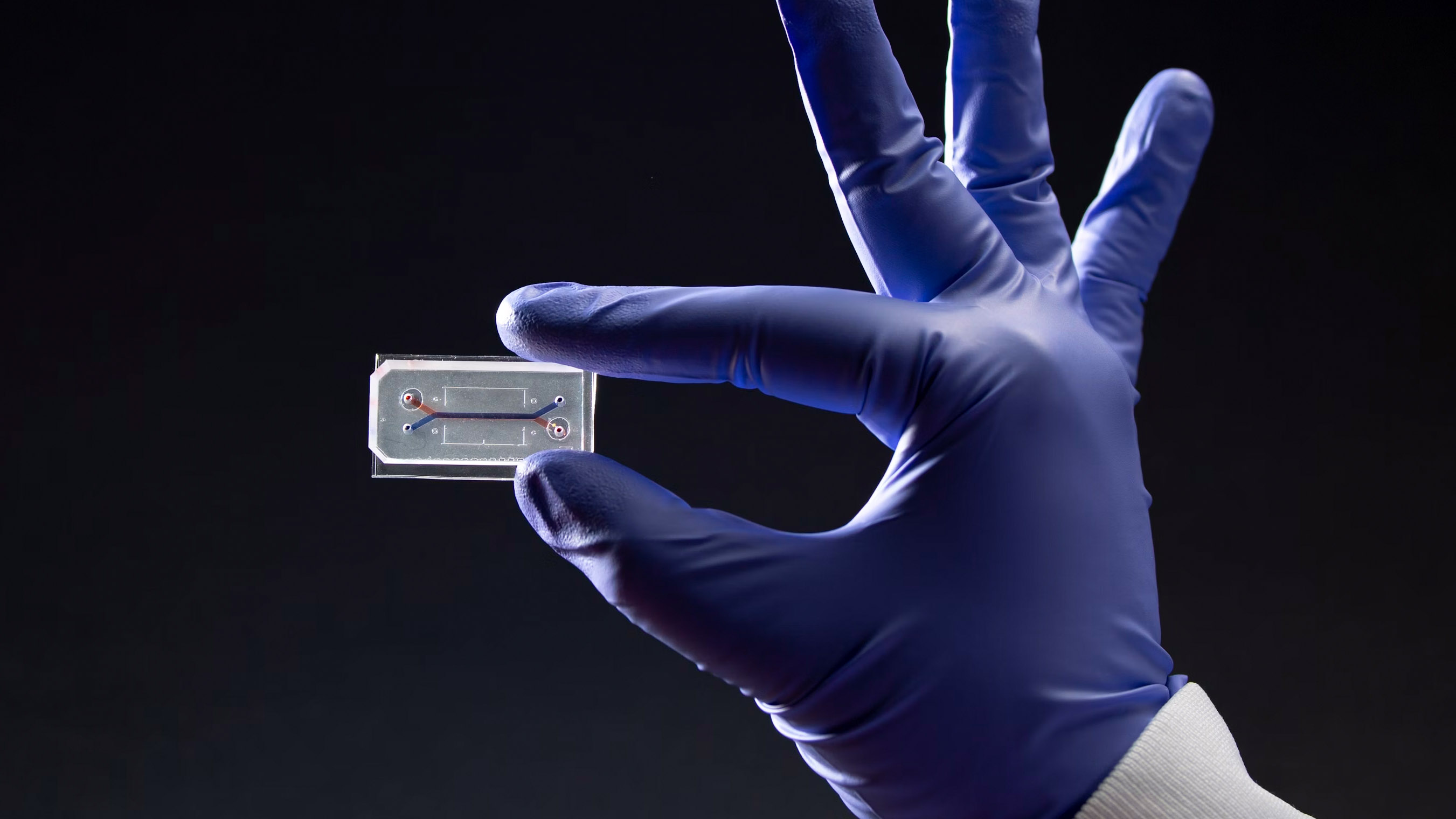
Is this the end of animal testing?
In a clean room in his lab, Sean Moore peers through a microscope at a bit of human intestinal tissue growing on a plastic chip. It’s one of 24 so-called “organs-on-chips” his team bought three years ago. The technology is designed to mimic human biology—and could reduce the need for animal testing.
The appeal is not only ethical. Around 95% of drugs developed through animal research ultimately fail in people, and early studies suggest organ-on-a-chip systems may offer more accurate insights into how diseases behave and how drugs work. But the field still faces major technical and cost challenges before it can replace animal research.
Find out how organ-on-chip technology could reshape drug testing.
—Harriet Brown
We can still have nice things
A place for comfort, fun, and distraction to brighten up your day. (Got any ideas? Drop me a line.)
+ Listen to the captivating first recordings of whale songs from 1949.
+ Meet the feline guardians of New York’s corner stores in this photo collection.
+ A newly discovered floor plan allowed historians to pinpoint the location of Shakespeare’s only property in London.
+ A music fan spent decades secretly recording 10,000 local shows. Now the entire collection is available online.
About The Author

