This is today’s edition of The Download, our weekday newsletter that provides a daily dose of what’s going on in the world of technology.
A reality check on the AI jobs hysteria
Despite the growing hysteria over AI’s threat to white-collar jobs, there’s still scant evidence that the technology has had a large-scale impact on the labor market.
Analysis of US labor data shows that unemployment in occupations most exposed to AI is actually lower than in less-exposed jobs. There are also no signs that large numbers of workers are shifting from AI-threatened professions into supposedly safer manual-labor jobs.
It’s true that things aren’t great in the job market—but the question is why. Here’s what the data really says about AI and jobs.
—David Rotman
Opinion: It’s time to address the looming crisis in entry-level work
—Georgios Petropoulos, an assistant professor at the USC Marshall School of Business
AI has not yet produced mass unemployment. But it may be quietly weakening the first rung of the career ladder.
A recent Stanford study found that young workers in AI-exposed occupations suffered a sharp decline in employment after the spread of generative AI. The same pattern didn’t appear in low-exposure jobs, suggesting AI is replacing junior tasks that once gave young workers their first foothold.
It’s time to rethink how we train, prepare, and support young people entering the workforce. Read this op-ed on how job seekers, businesses, and society can adapt.
The must-reads
I’ve combed the internet to find you today’s most fun/important/scary/fascinating stories about technology.
1 The Pope has called for governments to regulate AI
In his first major teaching document, Pope Leo said AI must be “disarmed.” (BBC)
+ He warned that AI fuels war and misinformation. (CNN)
+ But could also “open up a horizon extending in all directions.” (Engadget)
+ Anthropic cofounder Chris Olah also spoke at the event. (Reuters $)
2 SpaceX has launched its biggest and most powerful rocket
The Starship V3 made its test flight debut two days after Elon Musk announced SpaceX’s IPO.(Guardian)+ SpaceX pulled off the launch, but not the landing. (Ars Technica)
+ The rocket could be key to SpaceX’s valuation. (Fortune $)
+ But rivals to the company are rising. (MIT Technology Review)
3 Huawei says it can make industry-leading chips within five years
The Chinese tech giant announced a breakthrough in chip design. (Reuters $)
+ Its progress underscores Beijing’s push to neutralize US sanctions. (NBC)
+ Chinese chip stocks rallied after the announcement. (Bloomberg $)
4 A new vaccine may protect against the Ebola strain behind the current crisis
Tests have shown promising results for the mRNA vaccine. (New Scientist)
+ Another Ebola vaccine that could be ready for trials in months. (BBC)
+ But vaccines face a new problem: their name. (MIT Technology Review)
5 A swimmer broke a world record at the ‘Steroid Olympics’
Athletes at the Enhance Games were encouraged to take dope. (Wired $)
+ Silicon Valley elites have backed the competition. (WP $)
+ Which fits right into 2026’s longevity vibes. (MIT Technology Review)
6 The EU plans to fine Google a massive antitrust penalty
For allegedly favoring its own services in search results. (CNBC)
+ It would be the largest penalty for breaching the Digital Markets Act. (Reuters $)
7 US quantum computing subsidies may not be legal
Congressional critics say the funding has been misused. (Ars Technica)
8 AI is minting new billionaires—and workers want their share
The Samsung labor showdown reflects global concerns. (Rest of World)
9 China has launched artificial human embryos into orbit
To find out whether we can reproduce beyond Earth. (Gizmodo)
10 Jony Ives has designed Ferrari’s first fully-electric car
The legendary Apple designer has created a polarizing aesthetic. (FT $)
Quote of the day
“Technology is never neutral, because it takes on the characteristics of those who devise, finance, regulate, and use it.”
—Pope Leo issues a warning about AI in his first encyclical letter, entitled ‘Magnifica humanitas: On Safeguarding the Human Person in the Time of Artificial Intelligence.”
One More Thing
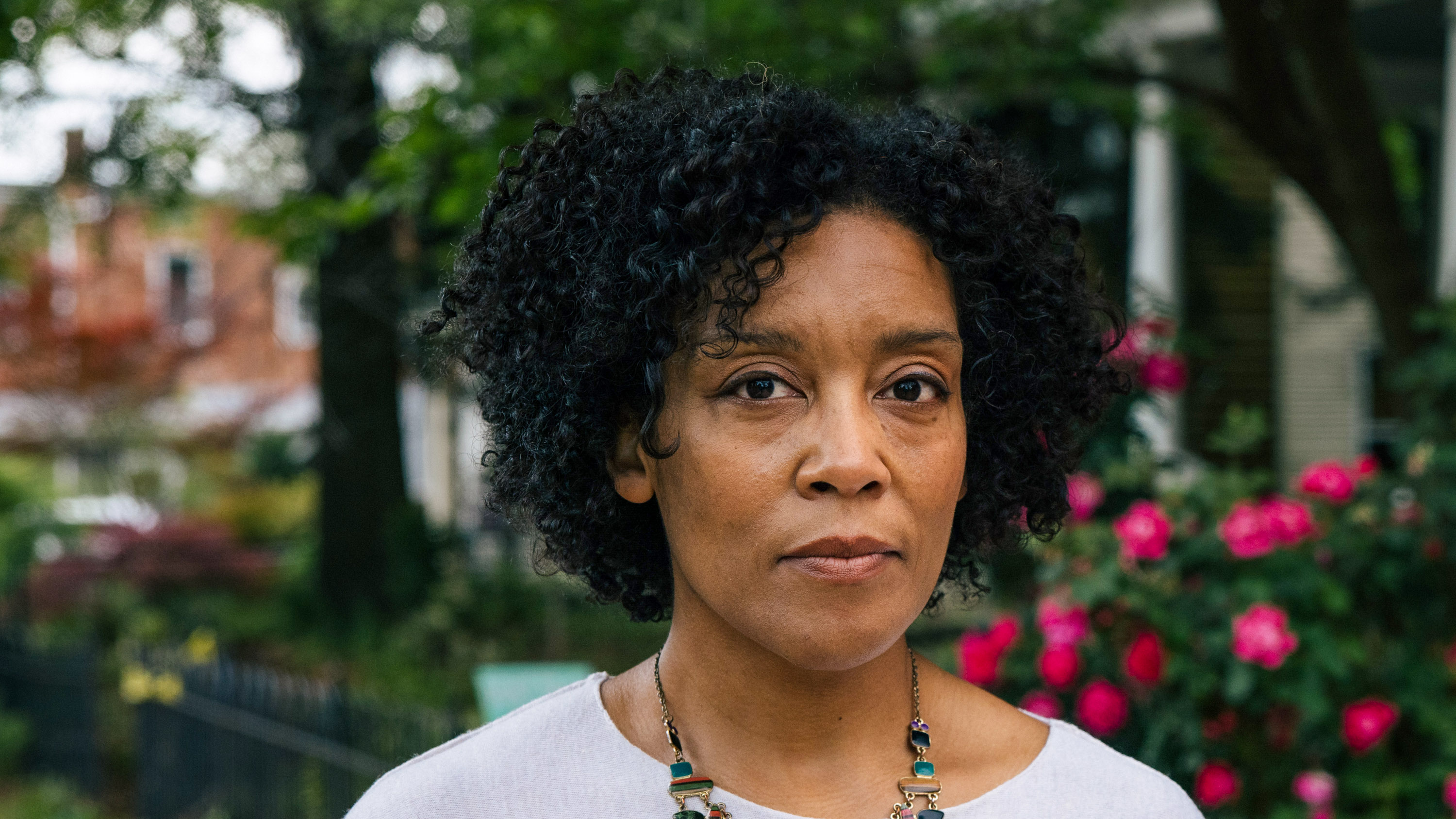
How climate vulnerability and the digital divide are linked
In Anacostia, a historic African-American section of Washington, DC, Monica Sanders is measuring Wi-Fi speeds. It’s below the FCC’s minimum to qualify as a broadband service. She then checks the temperature: 46.9 °F.
Sanders, an adjunct professor of law at Georgetown University, frequently records this combination of weak internet access and environmental conditions. Her work shows how underinvestment in infrastructure can leave underserved communities more exposed to climate risks like extreme heat and flooding.
Discover how the digital divide is shaping climate vulnerability in the US.
—Colleen Hagerty
We can still have nice things
A place for comfort, fun, and distraction to brighten up your day. (Got any ideas? Drop me a line.)
+ Here’s a joyful way to settle sibling squabbles: a mandatory dance-off.
+ Build the metropolis of your dreams in this browser-based city simulation game.
+ Watch this hypnotic tiny train move in a perfect, endless loop on a rotating turntable.
+ Take a nostalgic look at early computing history with this curated gallery of vintage punch cards.
About The Author


