Technology

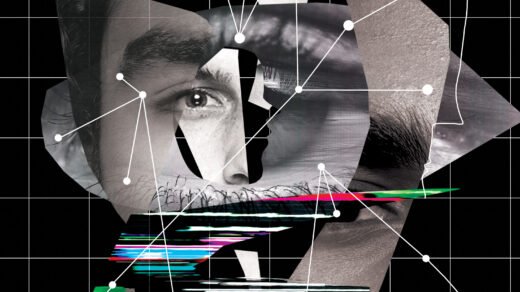
No one’s sure if synthetic mirror life will kill us all

April 15, 2026
For four days in February 2019, some 30 synthetic biologists and ethicists hunkered down at a conference center in Northern Virginia to brainstorm high-risk, cutting-­edge, irresistibly exciting ideas that the National Science Foundation should fund. By the end of the meeting, they’d landed on a compelling contender: making “mirror” bacteria. Should they come to be,…

Building trust in the AI era with privacy-led UX

April 15, 2026
The practice of privacy-led user experience (UX) is a design philosophy that treats transparency around data collection and usage as an integral part of the customer relationship. An undertapped opportunity in digital marketing, privacy-led UX treats user consent not as a tick-box compliance exercise, but rather as the first overture in an ongoing customer relationship.…

Redefining the future of software engineering

April 14, 2026
Software engineering has experienced two seismic shifts this century. First was the rise of the open source movement, which gradually made code accessible to developers and engineers everywhere. Second, the adoption of development operations (DevOps) and agile methodologies took software from siloed to collaborative development and from batch to continuous delivery. Now, a third such…

The Download: the state of AI, and protecting bears with drones

April 14, 2026
This is today’s edition of The Download, our weekday newsletter that provides a daily dose of what’s going on in the world of technology. Want to understand the current state of AI? Check out these charts.  If you’re following AI news, you’re probably getting whiplash. AI is a gold rush. AI is a bubble. AI is taking your job. AI can’t even…

NASA is building the first nuclear reactor-powered interplanetary spacecraft. How will it work?

April 14, 2026
MIT Technology Review Explains: Let our writers untangle the complex, messy world of technology to help you understand what’s coming next. You can read more from the series here. Just before Artemis II began its historic slingshot around the moon, Jared Isaacman, the recently confirmed NASA administrator, made a flurry of announcements from the agency’s headquarters…

Coming soon: 10 Things That Matter in AI Right Now

April 14, 2026
Each year we compile our 10 Breakthrough Technologies list, featuring our educated predictions for which technologies will have the biggest impact on how we live and work. This year, however, we had a dilemma. While our final picks encompass all our core coverage areas (energy, AI, and biotech, plus a few more), our 2026 list…

The problem with thinking you’re part Neanderthal

April 14, 2026
You’ve probably heard some version of this idea before: that many of us have an “inner Neanderthal.” That is to say, around 45,000 years ago, when Homo sapiens first arrived in Europe, they met members of a cousin species—the broad-browed, heavier-set Neanderthals—and, well, one thing led to another, which is why some people now carry…

Why opinion on AI is so divided

April 13, 2026
This story originally appeared in The Algorithm, our weekly newsletter on AI. To get stories like this in your inbox first, sign up here. In an industry that doesn’t stand still, Stanford’s AI Index, an annual roundup of key results and trends, is a chance to take a breath. (It’s a marathon, not a sprint, after…

Want to understand the current state of AI? Check out these charts.

April 13, 2026
If you’re following AI news, you’re probably getting whiplash. AI is a gold rush. AI is a bubble. AI is taking your job. AI can’t even read a clock. The 2026 AI Index from Stanford University’s Institute for Human-Centered Artificial Intelligence, AI’s annual report card, comes out today and cuts through some of that noise. …

The Download: how humans make decisions, and Moderna’s “vaccine” word games

April 13, 2026
This is today’s edition of The Download, our weekday newsletter that provides a daily dose of what’s going on in the world of technology. You have no choice in reading this article—maybe How do humans make decisions? The question has been on Uri Maoz’s mind since he read an article in his early twenties suggesting…